Inside Knitwear Manufacturing: A Technical Guide from Xiuyu Knitwear
Introduction to Knitwear Manufacturing
Knitwear manufacturing is a complex process that transforms yarn into finished garments through a series of technical steps. At Xiuyu Knitwear, a brand of Yayuhong Knitwear Factory based in Chenghai, China, we have been refining this craft for over 20 years. With a daily capacity of 30,000 pieces and a minimum order quantity (MOQ) of 50 pieces, we serve overseas B2B buyers seeking reliable OEM/ODM services. This article provides a technical overview of knitwear production, covering materials, processes, quality control, and industry standards.
1. Material Selection: Fibers and Yarns
The foundation of any knitwear lies in its fibers. Common materials include natural fibers like cotton, wool, and cashmere, and synthetic fibers such as polyester and acrylic. Blends are often used to combine properties like softness, durability, and moisture-wicking. For example, our Tencel Sun Protection Long Sleeve Knit Cardigan utilizes Tencel, a lyocell fiber known for its breathability and UV protection. Yarn selection involves considering fiber length, twist, and count, which affect the fabric's hand feel, drape, and performance. At Xiuyu Knitwear, we work closely with clients to source appropriate yarns based on their design requirements and target market.
2. Knitting Processes: Weft and Warp Knitting
Knitting is the core of garment formation. Weft knitting, used for most sweaters and cardigans, involves yarn fed horizontally across the needle bed. Warp knitting, on the other hand, feeds yarn vertically and is used for fabrics like mesh and tricot. Key technical parameters include gauge (needles per inch), stitch density, and machine type (circular, flat, or warp). For instance, our Lightweight Mesh Knit Cardigan requires fine-gauge flat knitting to achieve its open, airy structure. Computerized flat knitting machines allow for complex patterns and shaping, reducing waste and enabling seamless or fully-fashioned garments. Xiuyu Knitwear employs modern knitting equipment to handle diverse designs, from basic crew neck pullovers to oversized cardigans.
3. Garment Assembly and Finishing
After knitting, panels are linked or sewn together. Linking is preferred for sweaters as it creates a seamless join, while sewing is used for cut-and-sew knits. Finishing processes include washing, pressing, and trimming. Washing can be done to soften the fabric, remove impurities, or achieve a specific hand feel. Pressing ensures the garment retains its shape. At Xiuyu Knitwear, each step is monitored to maintain consistency. Our 7-day delivery for standard orders reflects efficient production planning and execution.
4. Quality Control in Knitwear Production
Quality control (QC) is integrated throughout the manufacturing process. Incoming yarns are inspected for count, twist, and color consistency. During knitting, machines are monitored for stitch defects, holes, and tension issues. Post-knitting, garments undergo visual inspection for flaws, measurement checks against size specs, and colorfastness testing. While we do not make quality guarantees, our QC procedures are designed to identify and address issues at each stage. For OEM/ODM orders, we collaborate with clients to establish mutually agreed upon inspection criteria.
5. Industry Standards and Compliance
Knitwear manufacturers must adhere to various international standards, including those for fiber content labeling, care instructions, and safety regulations. For example, children's apparel may need to meet flammability standards, while all garments should comply with restricted substance lists (RSLs) such as OEKO-TEX. Xiuyu Knitwear stays informed about these requirements and works with clients to ensure products meet their destination markets' regulations. Our experience with export-ready production means we understand the importance of documentation and traceability.
6. Customization and OEM/ODM Services
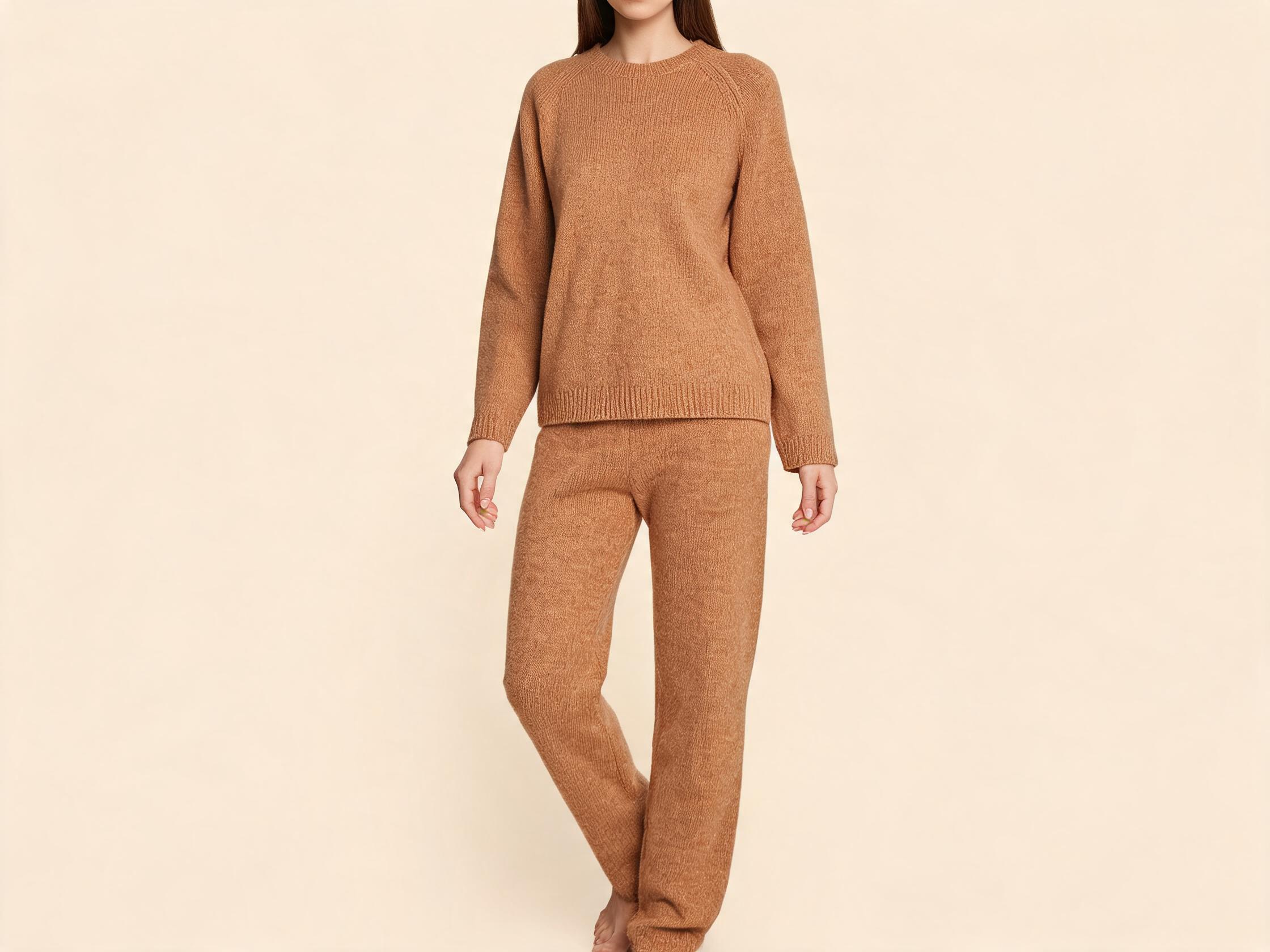
As an OEM/ODM manufacturer, Xiuyu Knitwear offers extensive customization options. Clients can specify yarn type, color, stitch pattern, garment style, and labeling. Our low MOQ of 50 pieces per style/color allows for small-batch testing and market trials. With a 20-year history, we have developed a streamlined process from sample development to bulk production. For example, our Caramel Set and Cream Set demonstrate our ability to produce coordinated knitwear sets with consistent dyeing and finishing.
Conclusion
Knitwear manufacturing combines artisanal skill with technical precision. From fiber selection to final inspection, each step influences the final product. Xiuyu Knitwear leverages two decades of experience, a daily capacity of 30,000 pieces, and a commitment to OEM/ODM excellence to support B2B buyers worldwide. Whether you need a simple crew neck pullover or a complex mesh cardigan, our team is equipped to bring your designs to life. Contact us to discuss your next knitwear project.
Tags